

The Bristol heat network
As part of Bristol City Leap, we are building a citywide, low carbon heat network.
A heat network is an underground pipe system that supplies heating and hot water to buildings that are connected to the network. Find out more below. The development of the heat network will provide low carbon, reliable heat to the community while creating jobs and delivering social value. The decarbonisation of heat is a crucial step in achieving Bristol’s goal to become carbon-neutral.
Vattenfall is working with Bristol City Leap as the company responsible for expanding the existing heat network, developing new network areas and ultimately interconnecting them to create a single Bristol heat network.
As part of our partnership, Vattenfall is committed to expanding the city’s heat network, increasing the supply of low carbon heat to homes and businesses, and progressively reducing the carbon intensity of heat supplied. This includes deploying low carbon heat sources over time, delivering measurable social value through local supply chains and jobs, and meeting defined customer service and performance standards under a long‑term concession with Bristol City Council. By 2050, Vattenfall hopes that over half of all Bristolians living, working, and learning in the city will be kept warm by the Bristol heat network. Learn more about Vattenfall’s vision for the Bristol heat network here.
Vattenfall is delivering an integrated and inclusive service that delivers reliable heating and hot water to our customers at a cost that is fair. Find out more information about Vattenfall’s commitments as part of Bristol City Leap below, and discover more about our heat network tariffs by clicking here.
Hear more about what Vattenfall is doing in Bristol here:
What are heat networks?
Heat networks (sometimes referred to as ‘district heating’ or ‘communal heating’) provide heating and hot water to multiple properties rather than each property having to generate its own.
The heating and hot water are distributed by an underground pipe system to the buildings that are connected to the network. These individual homes and buildings still control the heating and hot water in their home, just as they would if they had their own heating system.
It is a more efficient and low carbon way of providing heating and hot water to homes and businesses, especially if energy is generated using renewable or low carbon heat sources.
So far in Bristol, Vattenfall use the floating harbour to generate 3MW of low carbon heat through an award-winning water source heat pump at Castle Park Energy Centre. This is England’s largest harbour-based water source heat pump and provides heating and hot water to 2,500 homes through the Bristol heat network.
Vattenfall’s goal is that buildings in Bristol will be heated by a combination of water source and air source heat pumps, electric boilers, thermal storage and waste heat from industrial processes.
Watch this video to find out how the Bristol heat network works here:
Networks areas
The Bristol heat network currently supplies the equivalent of over 13,000 homes with heating and hot water. This is set to increase with new commercial and residential developments connecting, as well as existing buildings on the network route by 2030.
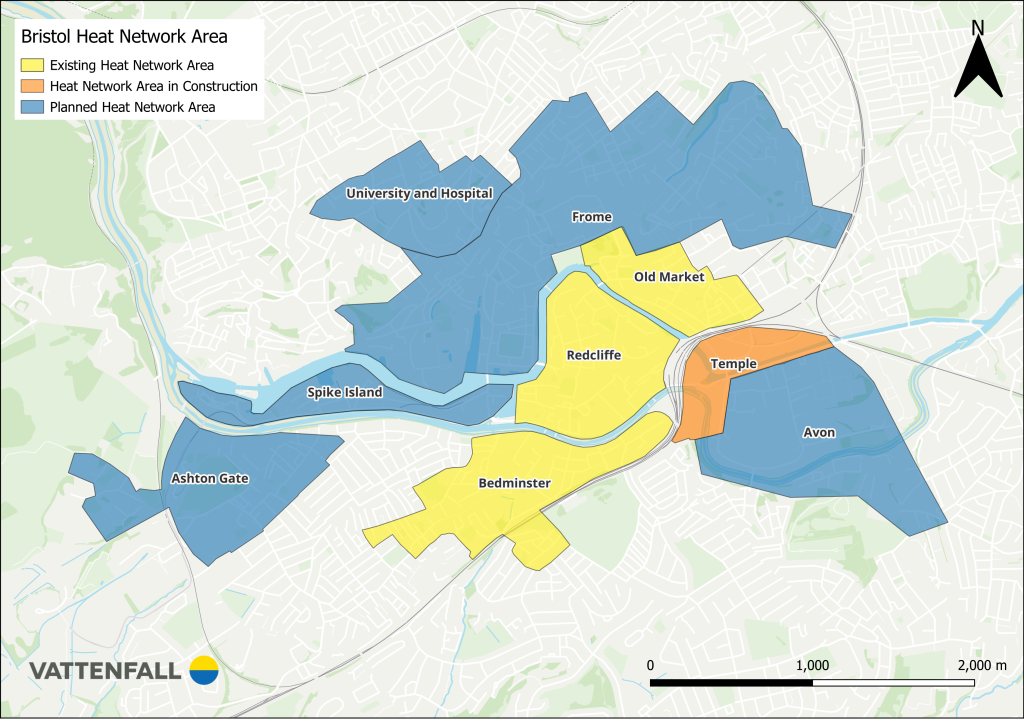
Vattenfall has nine heat network areas planned for Bristol and is currently serving customers in Redcliffe, Old Market, Bedminster and Temple. A new network area is under construction in Frome, which is the latest city centre network area.The Bristol heat network currently supplies the equivalent of over 13,000 homes with heating and hot water. This is set to increase with new commercial and residential developments connecting, as well as existing buildings on the network route by 2030.
Vattenfall has nine heat network areas planned for Bristol and is currently serving customers in Redcliffe, Old Market, Bedminster and Temple. A new network area is under construction in Frome, which is the latest city centre network areaThe Bristol heat network currently supplies the equivalent of over 13,000 homes with heating and hot water. This is set to increase with new commercial and residential developments connecting, as well as existing buildings on the network route, by 2030.
Vattenfall has nine heat network areas planned for Bristol and is currently serving customers in Redcliffe, Old Market, Bedminster and Temple. A new network area is under construction in Frome, which is the latest city centre network area.
Network areas are shown in the map below.
Project updates
To find out more about heat networks and works happening in your area, visit the Building the Bristol heat network website here.
2050 Vision
Vattenfall’s vision is that over half of all Bristolians living, working and learning in the city will be kept warm by the Bristol heat network by 2050. Visit Vattenfall’s website here to find out more.
Why we need heat networks
In response to the climate emergency, Bristol has committed to becoming a carbon neutral city. Heat networks help us decarbonise how we heat our homes and businesses in urban areas by ultimately replacing fossil fuels with low carbon sources.
By 2030, Vattenfall will heat Bristol using a combination of water source and air source heat pumps, electric boilers, thermal storage and waste heat from industrial processes.
Learn more about why we need heat networks here, or watch the video below.
Heat network commitments
Vattenfall has contractual commitments as part of Bristol City Leap, including:
Connect to the Bristol heat network
If you're planning a new development in a heat network area or have an existing building that would benefit from connecting, email the Vattenfall business development team at bristolbusdev@vattenfall.com.
For more information on connecting to the Bristol heat network, visit Vattenfall's website here.